
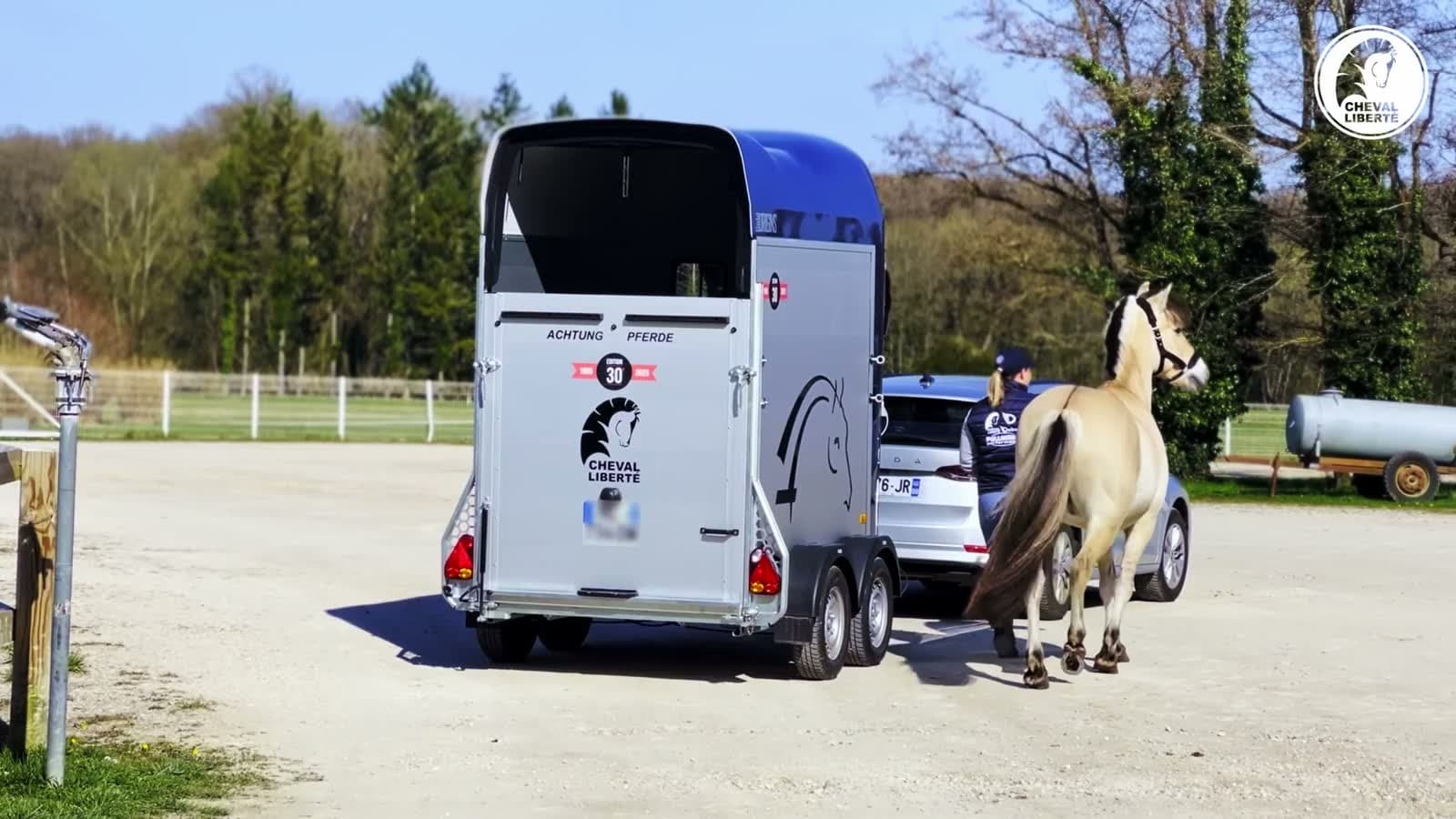
Sale and delivery of horse trailers in Spain and internationally
Your horse trailer,delivered ready to hitch up.
Type-approved trailers and vans from Cheval Liberté, Böckmann, Ifor Williams, Humbaur and Fautras. Delivered registered, tested and plated: hitch up and go.
- 317models
- One to four horses, in stock
- 2years
- Written warranty, nearly new included
- 0€
- Registration and testing, included in the price
Registered and tested
We handle type approval, plates and the first roadworthiness test. You never set foot in a traffic office.
Two-year warranty
No carve-outs on chassis, axle or brake. Nearly-new units included.
Scheduled delivery
To your home or your yard, on a date agreed by phone. Island and long-haul destinations on request.
Our own workshop
We repair what we sell and stock the parts that actually break.
Catalog
Best sellers, starting with the most affordable
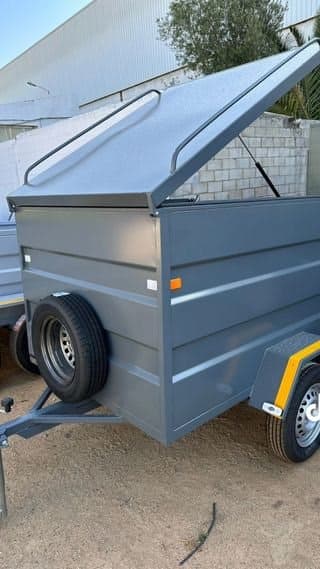
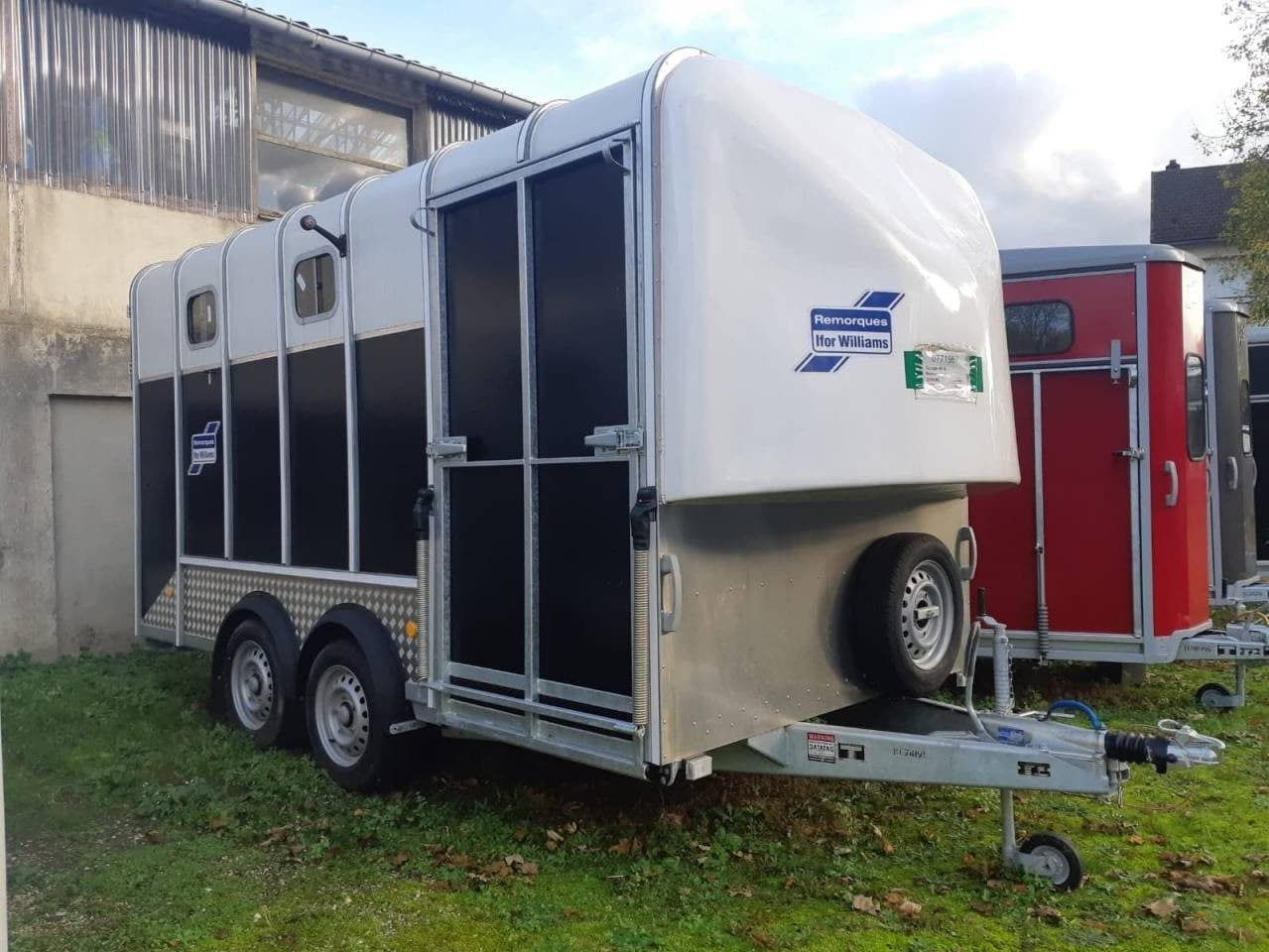
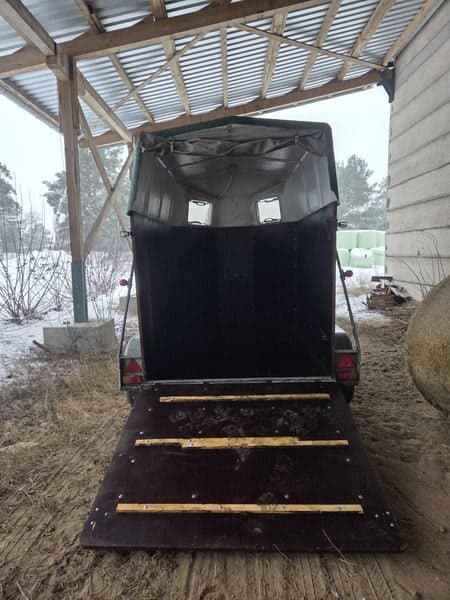
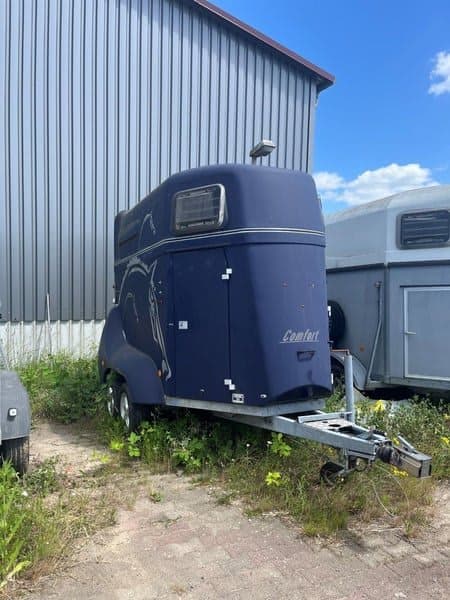
Models from every category, mixed together: the ones that sell most and the ones that open the price range. Let the strip run or move it with the arrows.
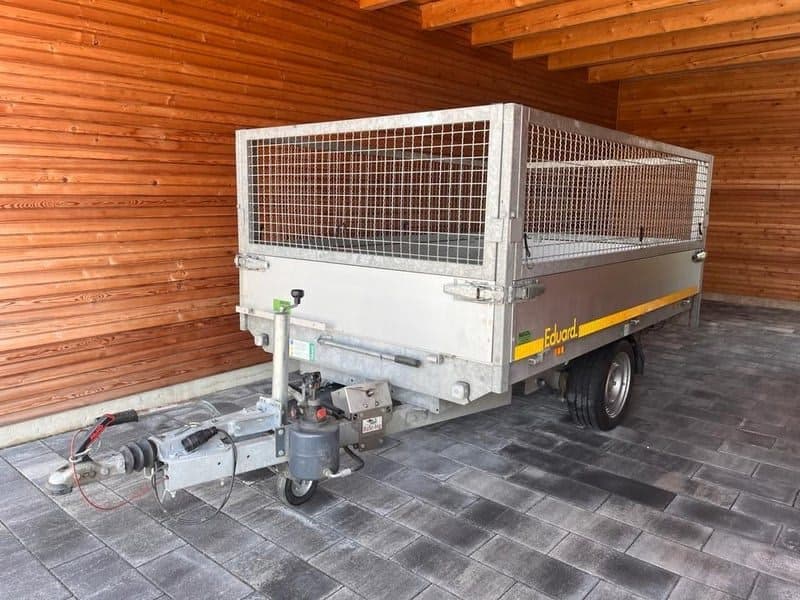
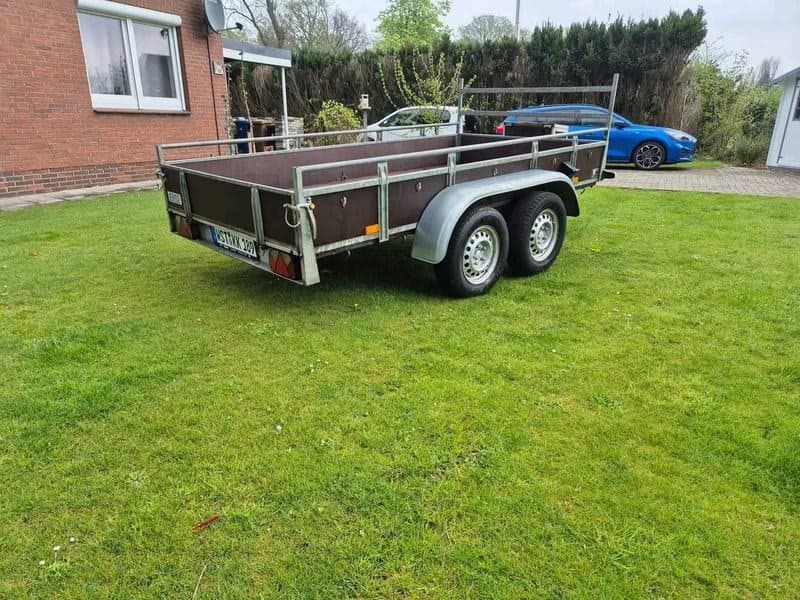
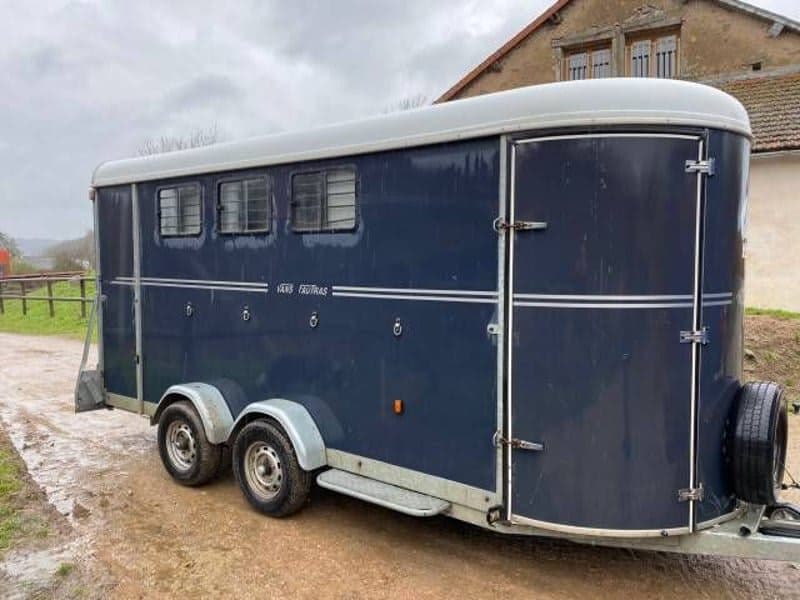

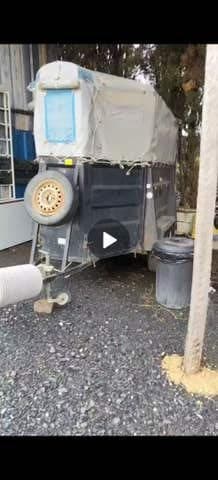
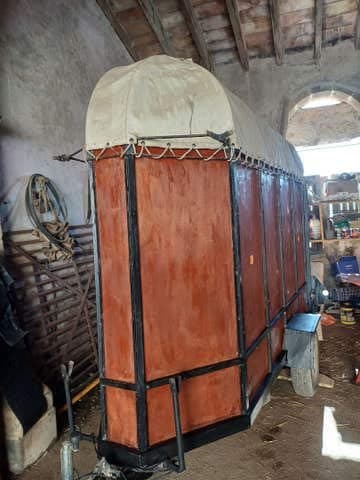
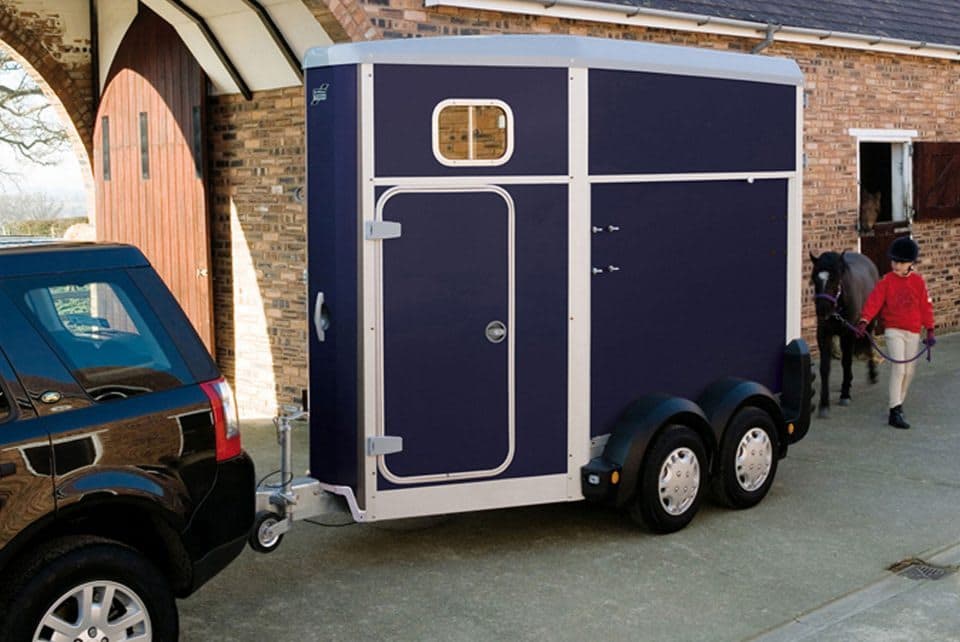
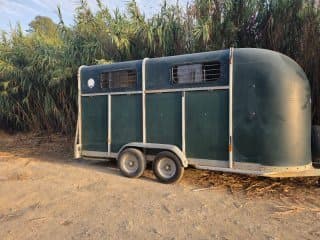
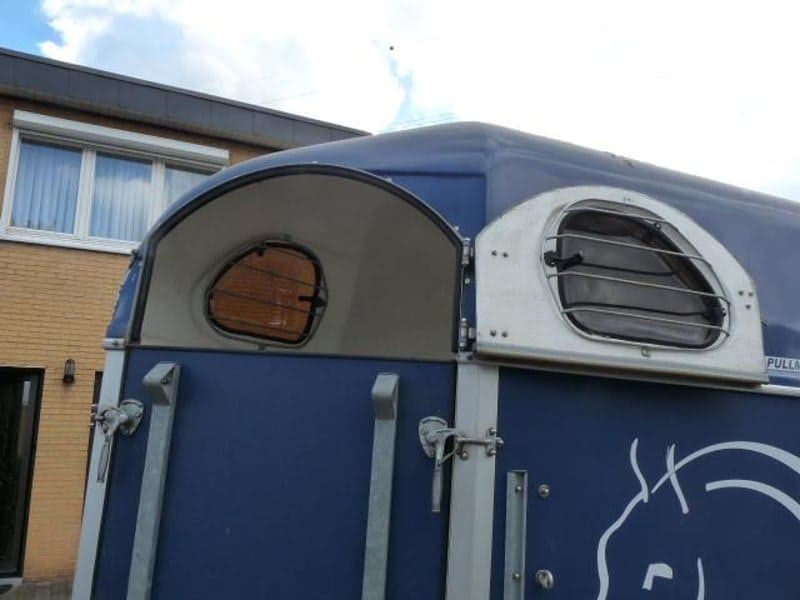
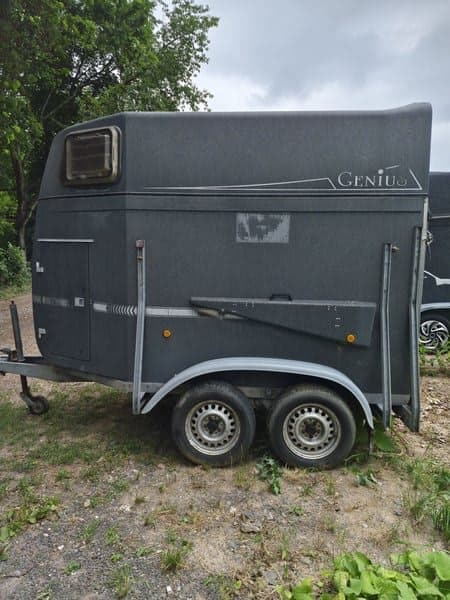
Start with the number of stalls
Stalls decide everything else: length, gross weight and therefore the licence you need. Start there and the rest follows.
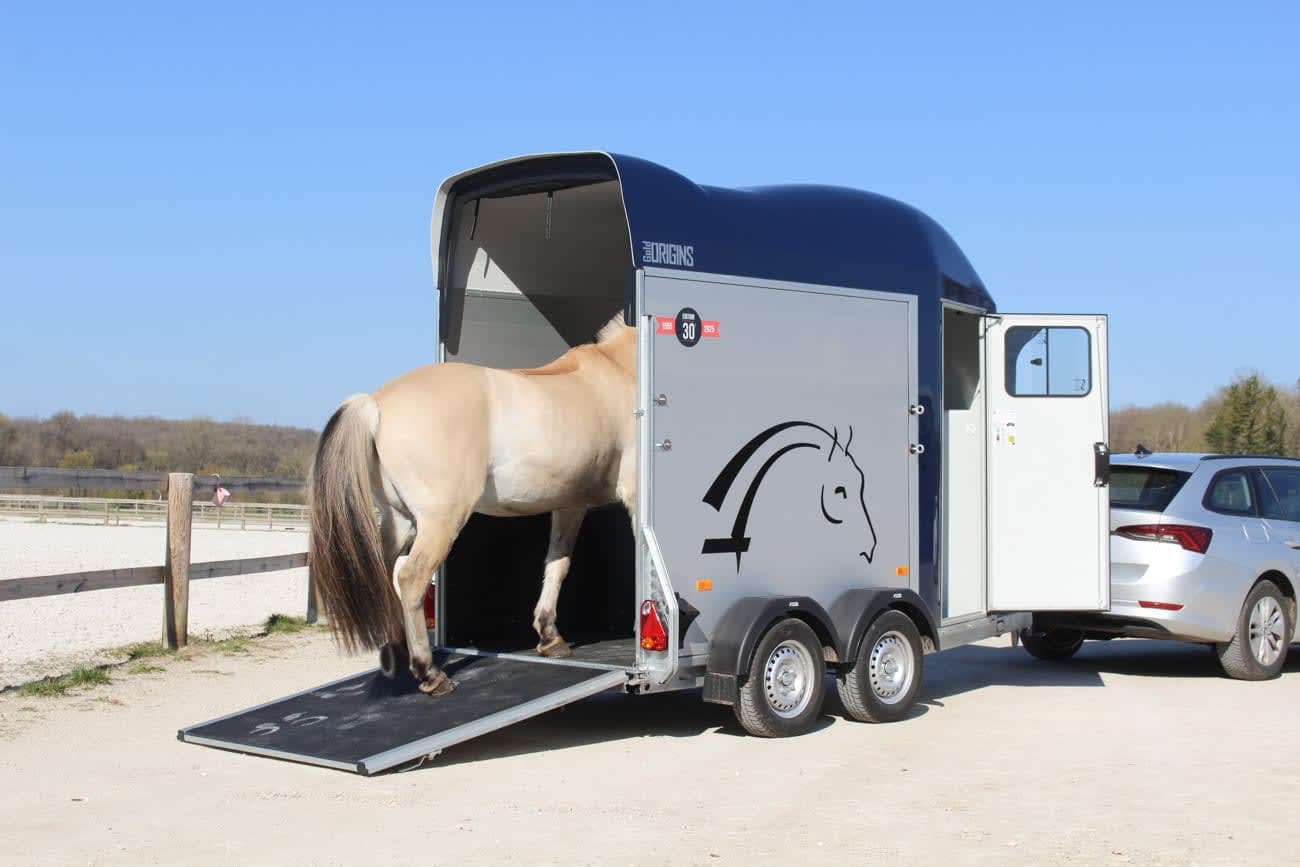 New
NewNew one-horse trailers
13 models · from 1.450,00 €
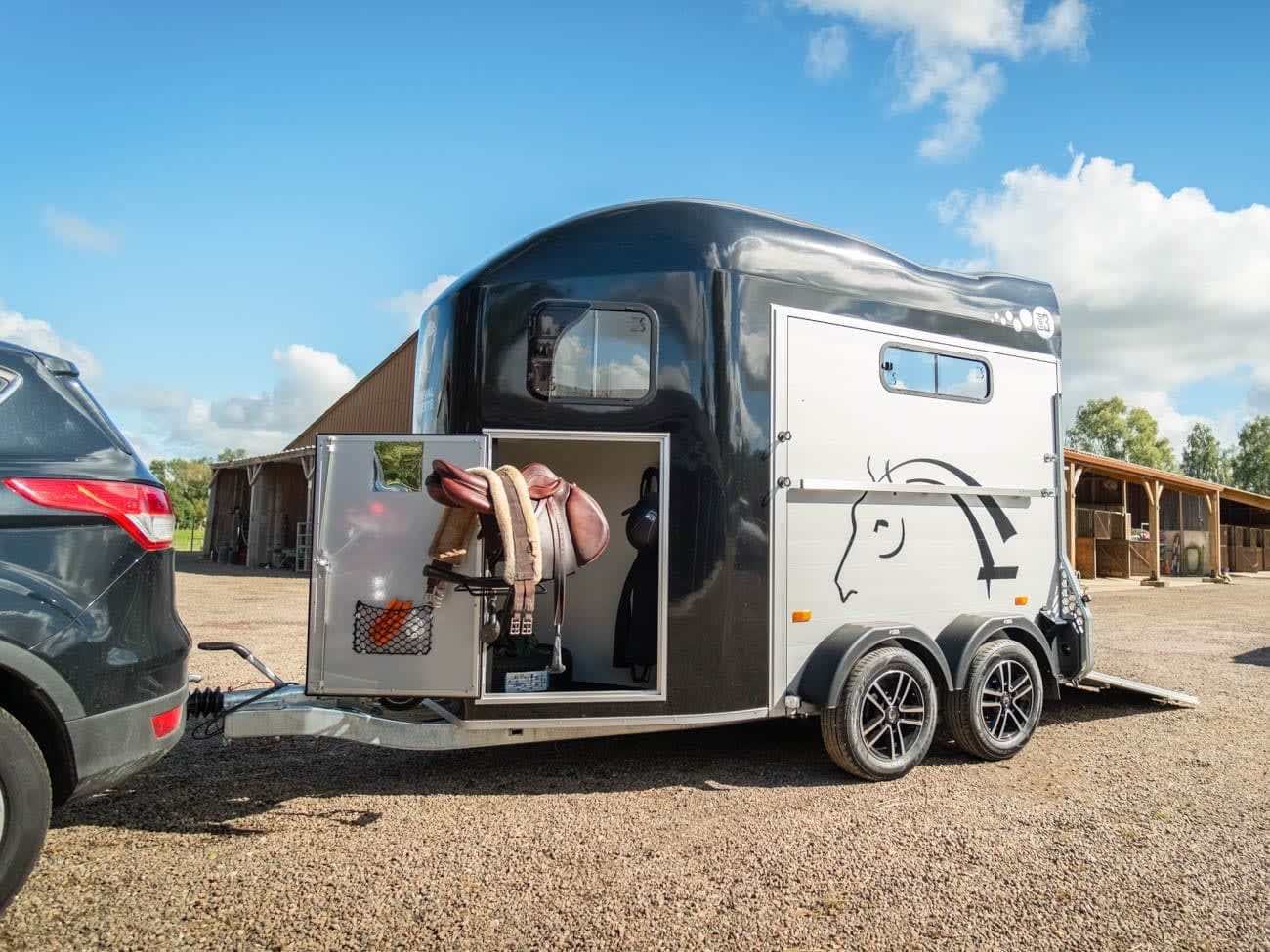 New
NewNew two-horse trailers
81 models · from 990,00 €
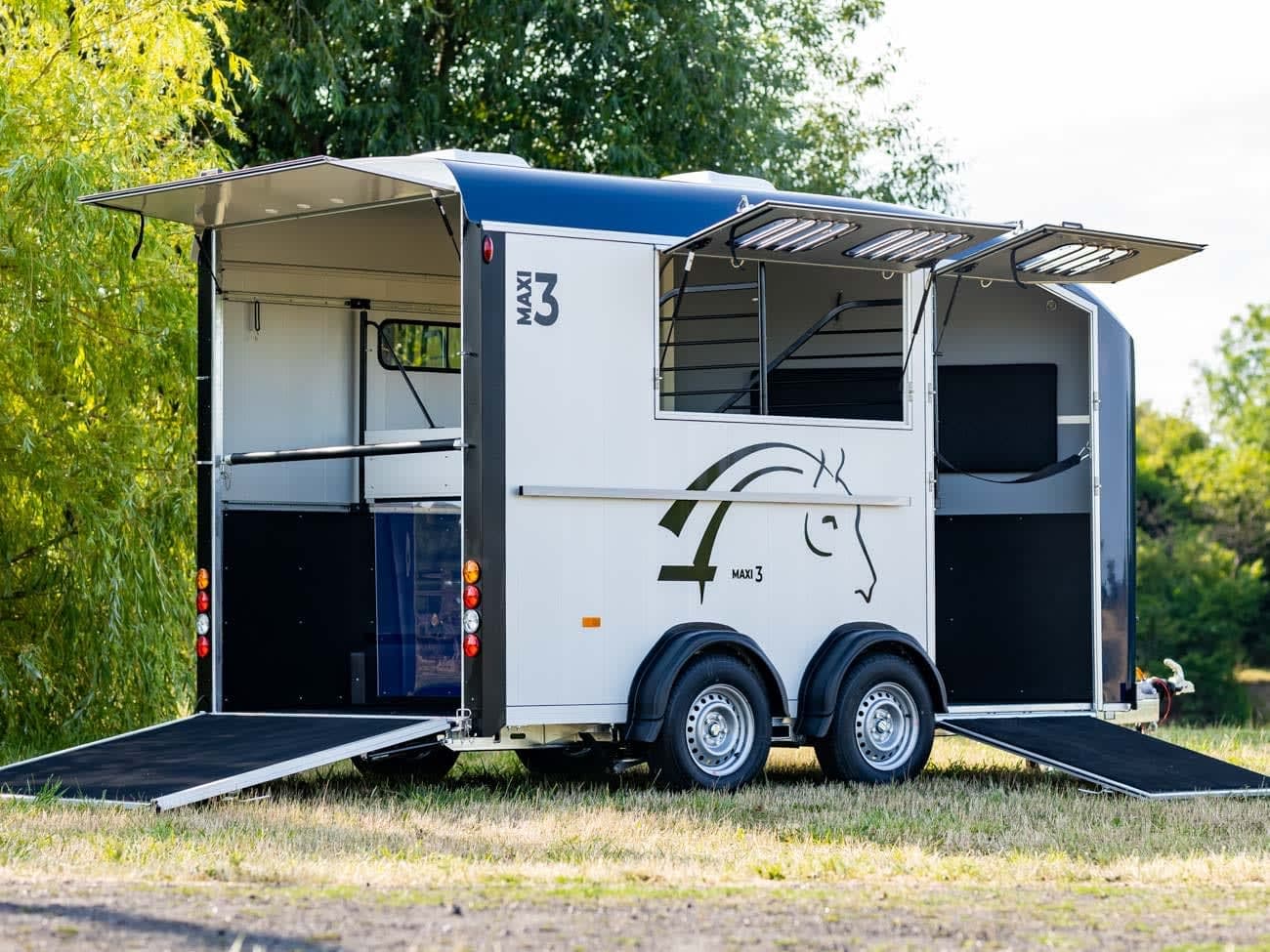 New
NewNew three- and four-horse trailers
5 models · from 8.800,00 €
 Used
UsedUsed one-horse trailers
12 models · from 1.140,00 €
 Used
UsedUsed two-horse trailers
198 models · from 900,00 €
 Used
UsedUsed three- and four-horse trailers
8 models · from 2.980,00 €
Before you choose
Can you tow it on your licence?
What counts is not the weight of the trailer but the combined gross weight of car and trailer. That sum decides which licence you need, and checking it prevents more returns than anything else we do.
Licence B
Up to 3,500 kg for car and trailer combined. Enough for most single-horse trailers and for a light two-stall behind a large 4x4.
Licence B96
Up to 4,250 kg. Seven hours of training, no theory exam: the cheapest step up to a normal two-stall trailer.
Licence B+E
Up to 7,000 kg, with the trailer capped at 3,500 kg. Required for every three- and four-stall trailer. Practical test needed.
And a second check: your towing vehicle has a maximum towable mass on its registration document. That figure overrides the licence: even if your entitlement allows more, you cannot exceed what the manufacturer authorises. Message us on WhatsApp with the document in front of you and we will go through it in two minutes.
Most ordered
Moving this week
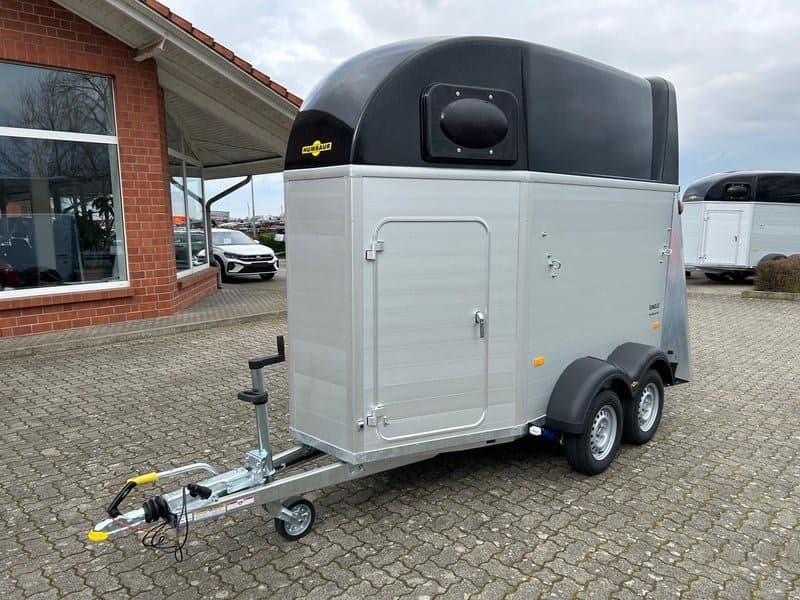
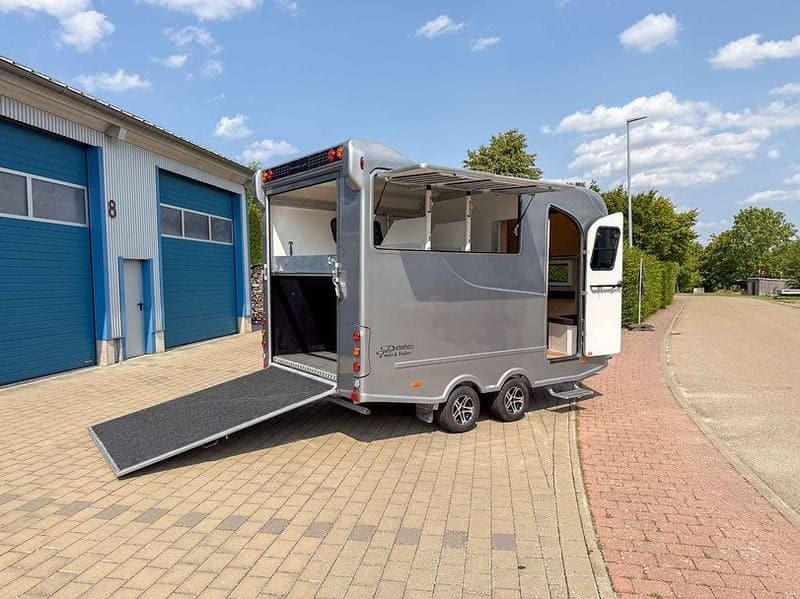
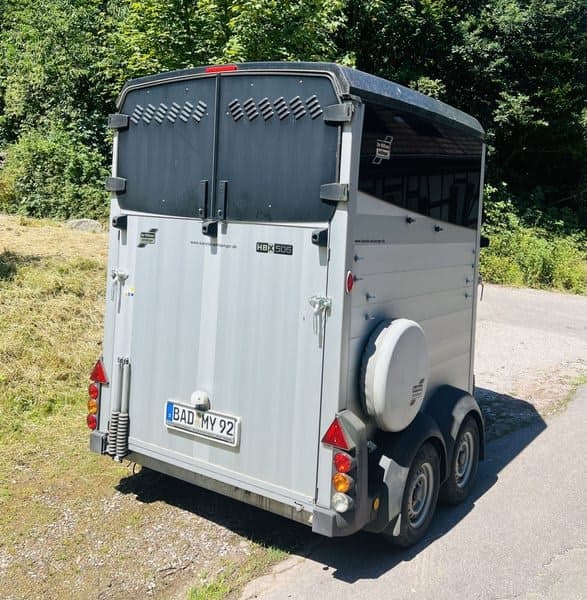
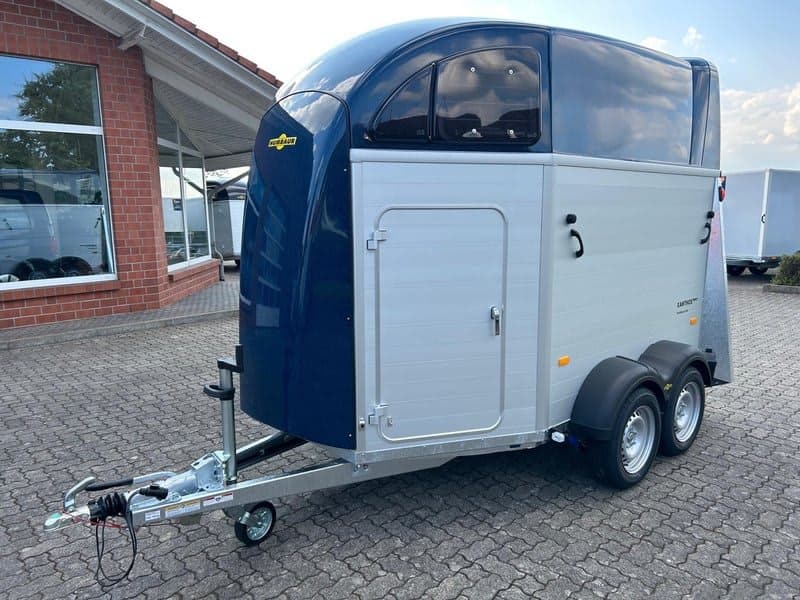
The second decision
Polyester, aluminium or mixed
No material is better in the abstract. What changes is where you pay for it: in payload, in cabin temperature, or in the workshop bill.
| Criterion | PolyesterThe most common | AluminiumThe lightest | MixedSteel and polyester |
|---|---|---|---|
| Unladen weight | The benchmark. It is what the other two are measured against. | 80 to 150 kg less, all of it going straight into payload. | The heaviest. Galvanised steel chassis and frame. |
| Thermal insulation | Good. Parked in the sun, the inside stays clearly cooler than a metal box. | The weak point, unless it is sandwich panel with an insulating core. Insist on roof extractors. | That of polyester, plus the thermal mass of the frame. |
| Impact resistance | Absorbs impacts without denting, but a real break needs resin repair, not panel beating. | It dents, but it can be straightened. A damaged panel is replaced on its own. | The toughest of the three. This is what you buy for hard use. |
| Maintenance | Washing, little else. The colour dulls over the years without waxing. | Close to none. It does not rust and does not fade. | Check the galvanising near the coast. Hot-dip galvanising lasts decades. |
| Price | The most affordable of the three. | 20 to 40 % above the equivalent polyester model. | In between, and the best at holding resale value. |
One thing rarely said out loud: the weight difference between materials only matters if your towing vehicle is close to its limit. With 400 kg of headroom to spare, aluminium is charging you for an advantage you will never use.
How it works
From order to first outing
Four steps, and only the first depends on you. These are this year's real timings, not brochure figures.
- 01
Order and checks
We confirm your vehicle's towing capacity and your licence by phone before taking any money. If the combination does not work, we say so and find another model.
Same working day
- 02
Approval and plates
We file the paperwork, pass the first roadworthiness test and fit the plate. Registration tax is included in the price you see.
10 to 15 days
- 03
Scheduled delivery
Specialist transport to your address, on an agreed date and time slot. Nothing travels on an open truck.
5 to 10 working days
- 04
Handover
On delivery we check the hitch against your car, set the coupling height and walk you through the overrun brake. Half an hour well spent.
At handover
Frequently asked
What buyers ask before ordering
If your question is not here, message us on WhatsApp or send an email. Monday to Friday, 9am to 6pm, whoever answers has delivered trailers.
Do I need a B+E licence?
It depends on the combined gross weight of your car and the trailer. Up to 3,500 kg a standard B licence is enough; up to 4,250 kg you need B96, which takes seven hours of training and no theory exam. Above that, or with any three- or four-stall trailer, you need B+E with a practical test.
Do I have to deal with registration myself?
No. We file the paperwork, pass the first roadworthiness test and fit the plate before the trailer reaches you. Registration tax is included in the listed price. You only sign the sale contract.
How long is delivery and where do you go?
Five to ten working days once the trailer is registered, anywhere on the Spanish mainland, on a date and time slot agreed by phone. For the Balearics and Canaries we quote sea freight in advance; write to us before ordering and we will give you a fixed figure.
How often does a trailer need testing?
Trailers over 750 kg gross are tested two years after registration, then every two years up to ten years old, and annually after that. We hand yours over with the first test passed; we schedule the rest for you if you leave the reminder switched on in your account.
What exactly does the warranty cover?
Two years on the whole vehicle, chassis, axle and brake included, without the small print that excludes those three as fair wear and tear. It is the Spanish statutory warranty, and we do not trim it to the legal minimum. Nearly-new units are covered on identical terms.
Can I finance the purchase?
Yes, over 12, 24 or 36 months, assessed in advance and without obligation. Approval rests with the finance house, not with us. Above €3,000 many Spanish banks cap card payments; a bank transfer is usually the quicker route in that case.
Manufacturers
The brands we distribute
We work with the European manufacturers buyers recognise and compare before deciding. Every trailer leaves the factory with EU type approval; we handle registration and the roadworthiness test before delivery.
- Remolque Caballos134 models
 60 models
 22 models
 15 models
 13 models
 12 models
- Westfalia4 models
 1 model
- Richardson1 model
 1 model
- Alzaga1 model
Manufacturer names and logos are registered trademarks of their respective owners, shown to identify the trailers we distribute.